


Maktoum bin Mohammed highlights Arab Fiscal Forum
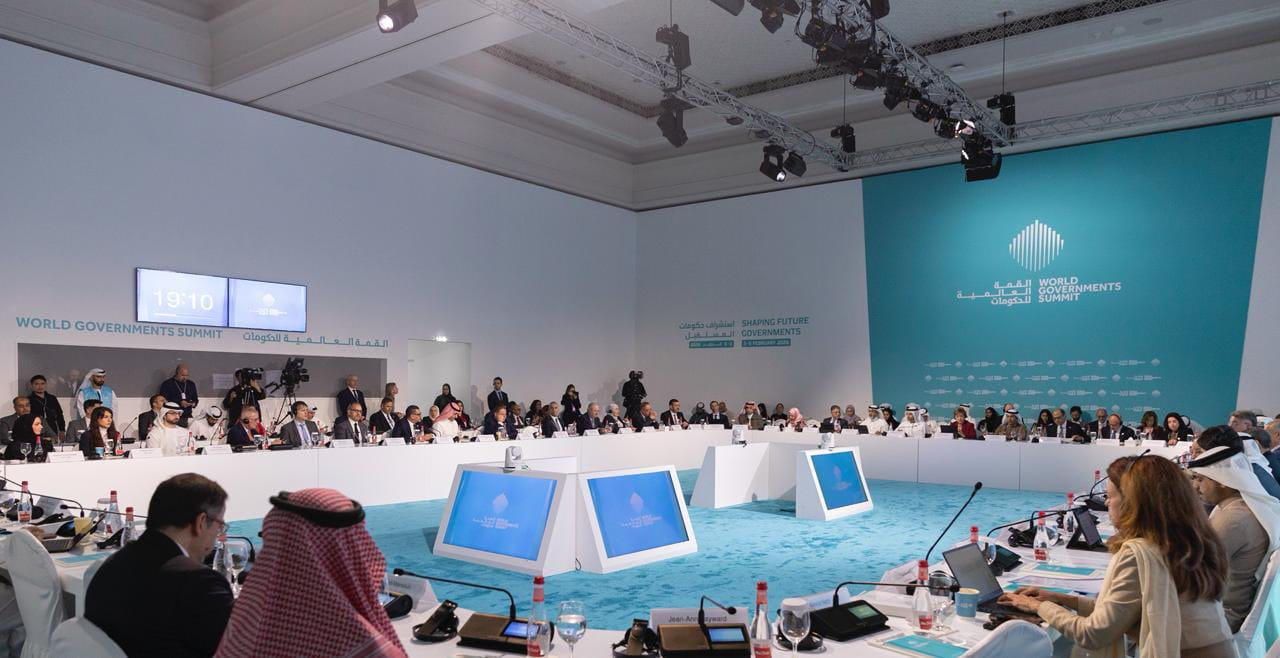
- Maktoum bin Mohammed highlights Arab Fiscal Forum as a strategic platform to reshape fiscal policy and bolster economic resilience
His Highness Sheikh Maktoum bin Mohammed bin Rashid Al Maktoum, First Deputy Ruler of Dubai, Deputy Prime Minister and Minister of Finance of the UAE, said that the tenth annual Arab Fiscal Forum comes at a defining moment for the region’s economies, providing Arab countries with a strategic platform to reassess fiscal policies in light of accelerating global economic shifts and to explore ways to strengthen the resilience of Arab economies, enhance their ability to absorb shocks, and build a more sustainable future.
His Highness added: "The challenges facing Arab nations, whether linked to global economic fluctuations, shifts in growth patterns, or the financing requirements of development, necessitate a profound and institutional financial dialogue. This dialogue must be built on exchanging expertise, developing frameworks and policies, and enhancing the efficiency of financial institutions.”
His Highness Sheikh Maktoum noted that hosting the forum in the UAE demonstrates the nation’s commitment to supporting this dialogue and empowering finance ministers and decision-makers to shape a shared vision that enhances financial stability, supports inclusive growth, and consolidates the foundations of sustainable development in the region.
The Ministry of Finance, in collaboration with the Arab Monetary Fund and the International Monetary Fund, organised the 10th Annual Arab Fiscal Forum on the preparatory day of the World Governments Summit 2026, which is being held from 3 to 5 February in Dubai.
Held under the theme ‘A Decade of Fiscal Dialogue: Building Macroeconomic Resilience by Strengthening Fiscal Policies and Institutions,’ the forum was attended by His Excellency Mohamed bin Hadi Al Hussaini, Minister of State for Financial Affairs; Her Excellency Dr. Kristalina Georgieva, Managing Director of the International Monetary Fund; and His Excellency Fahad M. Alturki, Director General and Chairman of the Board, Arab Monetary Fund.
The forum brought together finance ministers and central bank governors from across the Arab world, alongside a group of experts, senior officials, representatives of regional and international financial institutions, and economists from the region and beyond.
Key focus areas
The forum aimed to discuss the latest regional and global economic developments, review a decade of Arab fiscal dialogue, and examine priorities for the next phase, particularly in the areas of public finance reform, development financing, spending efficiency, digital transformation, and the use of advanced technologies in the management of fiscal policies and financial institutions.
In his opening remarks, HE Mohamed bin Hadi Al Hussaini said that the tenth Arab Fiscal Forum comes at a particularly critical time, as Arab economies navigate a global environment defined by heightened uncertainty and increasingly interconnected economic and financial challenges. These conditions, he noted, require more flexible and forward-looking fiscal policies, supported by institutional frameworks capable of adapting and responding effectively.
HE Al Hussaini explained that building macroeconomic resilience cannot be achieved through short-term measures alone, but rather through gradual structural reforms, improvements in the quality of fiscal policymaking, stronger public spending efficiency, more advanced debt management tools, and the broadening of revenue bases, measures that collectively support fiscal sustainability and reinforce confidence in national economies.
Strategic opportunity
His Excellency added that the digital transformation of public finance, driven by digital government solutions and artificial intelligence, provides a strategic opportunity to enhance governance, improve the efficiency of revenue and expenditure management, and strengthen transparency and accountability.
He stressed the importance of exchanging experiences and best practices among Arab countries, as well as deepening cooperation with international financial institutions, to support reform pathways and mobilise financing for development.
Fundamental shifts
For her part, Her Excellency Dr. Kristalina Georgieva, Managing Director of the International Monetary Fund, said: “The role of the Arab Fiscal Forum is more important than ever as we gather at a pivotal moment. The world is undergoing fundamental shifts in geopolitics, trade policy, technology, and demographics. These forces are converging to create much uncertainty. Global growth has held up remarkably well amid these changes, and the Arab region too has shown resilience. However, many risks remain.
“We need strong fiscal policies and renewed momentum on reforms to further bolster resilience to shocks and drive private sector growth. Sustained international support is critical to finance recovery and reconstruction. As always, the IMF stands ready to support the region, with integrated policy advice, financing, and capacity development.”
Meanwhile, HE Fahad Al Turki, Director General and Chairman of the Board, Arab Monetary Fund, said: “This forum provides an opportunity to assess the outcomes of a decade of dialogue on financial policies, as well as the role of the Arab Monetary Fund and its new strategy during a period defined by transformation and change. It underscores the Fund’s position as a key pillar of a strong Arab region and a leader in promoting economic stability and sustainable growth.
HE Al Turki added that the Fund carries out this mandate through its contribution to the regional financial safety net, alongside efforts to support economic stability, provide policy advice, build institutional capacity, deliver value-added services, and enhance its role as an intellectual and strategic partner in advancing reform and inclusive, sustainable growth across Arab countries.”
Four panel discussions
The forum featured four panel discussions. The first session, entitled ‘Fiscal policy at a time of shocks and uncertainty,’ addressed regional and global economic developments and the impact of trade and financial tensions on Arab countries. Participants discussed macroeconomic challenges and ways to strengthen resilience in the face of crises.
The second session focused on ‘Ten years of the AFF: looking back and forwards,’ during which participants reviewed the outcomes of the Arab Fiscal Forum over the past decade. Arab Ministers of Finance discussed ways to further develop the Forum’s agenda in the next phase.
Strengthening development financing
The third session, titled ‘Revamping expenditure policies and fostering development finance,’ discussed strategies to improve the efficiency of public spending and their impact on economic growth, as well as ways to strengthen development investment, particularly in countries facing fragile conditions. The session also explored opportunities for public-private partnerships. The Forum concluded with the fourth session, titled ‘Digital transformation in public finance and the scope for AI.’
Hosting the Tenth Annual Arab Fiscal Forum reaffirms the Ministry of Finance's commitment to supporting regional financial dialogue, strengthening Arab and international cooperation, and contributing to the development of more resilient and sustainable Arab fiscal policies capable of addressing challenges and achieving comprehensive economic development.
More on these topics
Most Recent News

Theyab bin Tahnoon inaugurates 15th season of Dubai Miracle Garden

Maktoum bin Mohammed chairs meeting of the Higher Committee for the Development of the Economic and Financial Sector



 For an optimal experience please