

RTA Launches Five-Star Performance Rating System for Taxi Companies
Dubai’s Roads and Transport Authority (RTA) has launched a five-star system to rate the performance of taxi companies in the emirate. The initiative aims to establish excellence in transport services, raise sector efficiency, improve the customer journey and encourage operators to adopt smart solutions and sustainable practices, thereby reinforcing Dubai’s position as a world-leading city for the quality and efficiency of sustainable, smart urban mobility services.
The system provides an integrated framework for measuring taxi company performance against defined criteria covering service quality, customer satisfaction, traffic safety, operational efficiency, digital transformation and environmental sustainability. It will contribute to a positive competitive environment among operators and encourage them to develop their services and raise them to levels that exceed customer expectations.
Service Quality Governance
His Excellency Mattar Al Tayer, Director General, Chairman of the Board of Executive Directors of the Roads and Transport Authority (RTA) affirmed that launching the five-star system is part of RTA’s approach to developing a people-centred urban transport system built on clear, measurable standards. He said the system is a strategic tool for governing taxi service quality and linking company performance assessments to customer satisfaction, safety, operational efficiency, innovation and sustainability.
Al Tayer said: “The taxi sector is a key component of Dubai’s integrated mobility system, supporting quality of life and the ease of movement of residents and visitors. Through the five-star system, we are moving from measuring service levels to building an integrated system for continuous improvement. It links incentives to performance results and enhances transparency and competitiveness among operators, ensuring reliable, safe and smart services that exceed customer expectations.”
He added: “The system reflects RTA’s drive to instil a culture of excellence in the taxi sector and to turn indicators of customer happiness, safety, sustainability and digital transformation into key drivers of service development. It also supports Dubai’s transition towards smart and sustainable mobility, strengthens the sector’s readiness to keep pace with growing demand for transport services, and consolidates the emirate’s standing among the world’s best cities for the quality and efficiency of urban mobility.”
Incentives and Continuous Improvement
Al Tayer said: “RTA has been keen for the rating to drive development, not merely to measure performance. We have linked rating levels to incentives that encourage outstanding companies to maintain their leadership, while at the same time introducing measures to improve the performance of lower-rated companies. This entrenches the concept of continuous improvement and raises the overall level of service across the sector.”
Based on the assessment results, companies awarded five stars will receive seven taxi plates, along with a certificate and a trophy from RTA, while four-star companies will receive five taxi plates.
Company ratings will be displayed on the smart screens in taxis, and a rating board will be placed at the entrance to each company’s headquarters. Measures aimed at improving performance and raising service levels will be applied to companies rated three stars or fewer.
RTA will update the assessment mechanism periodically to keep pace with global developments, sustain quality levels, enhance Dubai’s competitiveness and consolidate its leadership in urban mobility.
Precise Criteria
The assessment rests on four main pillars including 18 indicators that measure company performance in an integrated manner.
The first pillar, Sustainability, covers the number of green vehicles (electric and hydrogen) in each company; the ratio of drivers to vehicles; the percentage of productive kilometres to total kilometres travelled; and the average trip rating.
The second pillar, Technology, measures the number of e-hail trips out of total trips in the sector, the percentage of trips paid for electronically, the availability of a driver management system within the company, and the implementation rate of the driver working-hours policy.
The third pillar, Accountability, covers serious traffic accidents, quality violations, complaints about reckless driving, customer satisfaction (end-of-trip ratings for e-hail bookings) and driver satisfaction with e-hail.
The fourth pillar, Reliability, covers vehicle availability during peak hours, the number of vehicles activated on the e-hail system during peak hours, drivers’ acceptance rate of e-hail requests, and observations on cleanliness.
The criteria have been designed to provide an accurate, fair and integrated assessment of company performance and to encourage excellence, innovation and positive competition, with a direct impact on the quality of services provided to customers.
Five Companies
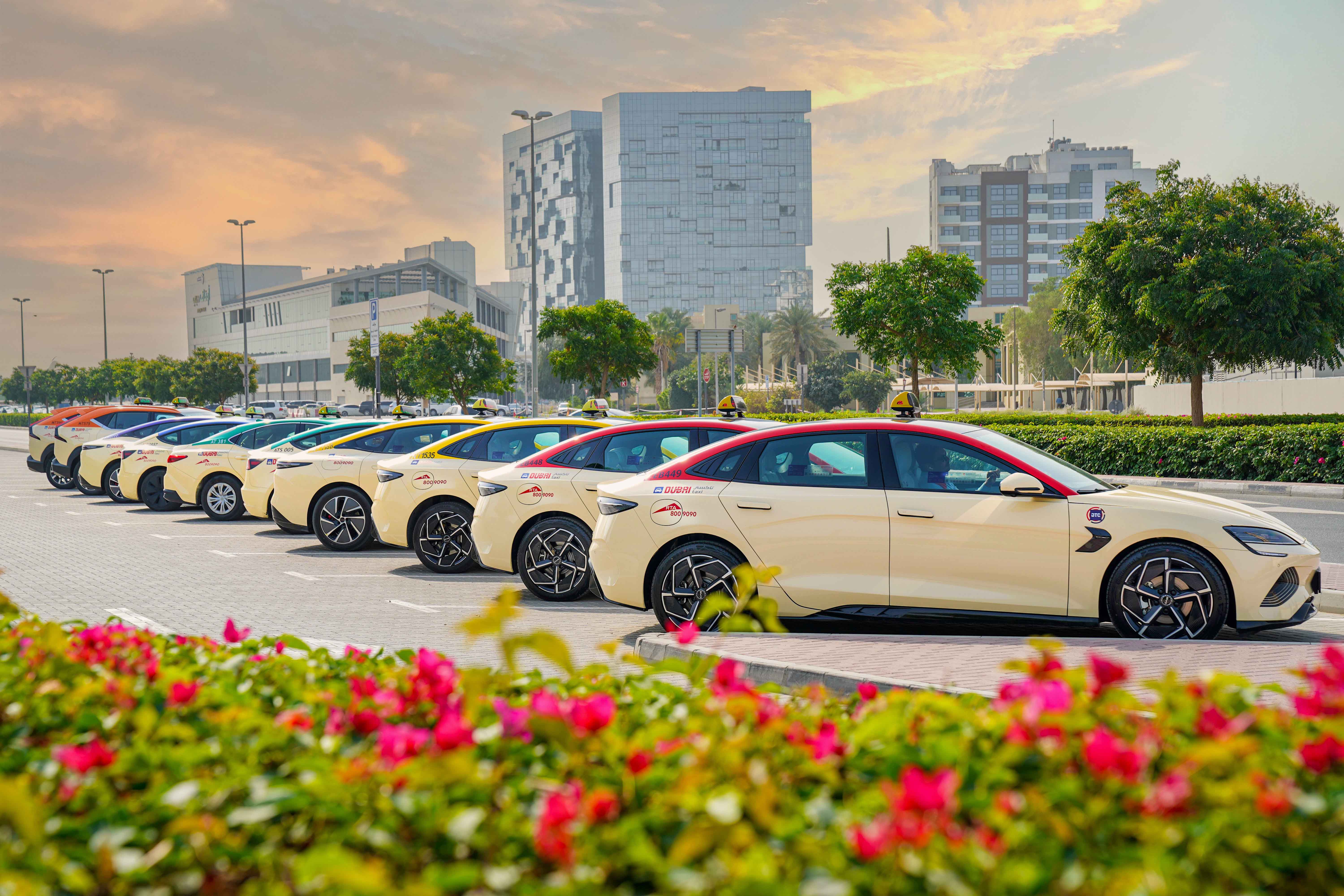
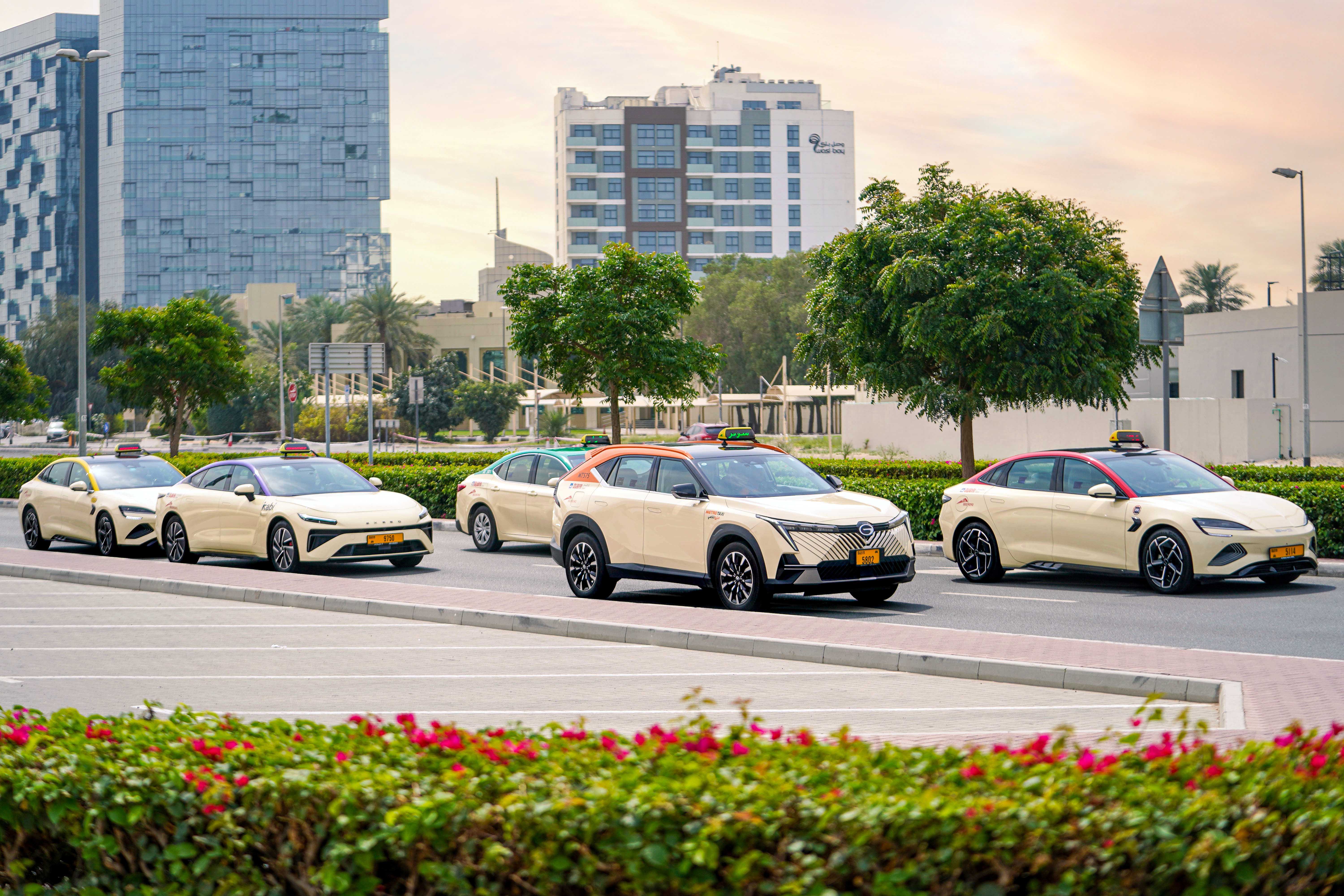
It is worth noting that Dubai’s taxi sector comprises five companies: Dubai Taxi Company, Kabi Taxi, National Taxi, Arabia Taxi and Metro Taxi. In 2025, the total number of taxis exceeded 14,346 vehicles, of which 12,380 were electric or hybrid. Taxis completed more than 120 million trips, carrying over 209 million passengers, and the sector accounted for 27% of all users of public transport, shared mobility and taxis in 2025.
RTA continues to reinforce Dubai’s position as a global capital of sustainable, environmentally friendly mobility through an integrated strategy for a full transition to zero-emission public transport by 2050.
Zero-Emission Strategy
RTA is implementing an integrated strategy to achieve a full transition to zero-emission public transport by 2050. It has raised the share of green (hybrid) vehicles in Dubai’s taxi and limousine fleet to more than 72%, while the transition to electric vehicles has reached 19%, exceeding the target set for 2026.
RTA has also drawn up an ambitious operational plan to convert the entire fleet to electric and hydrogen vehicles by 2040. It is expanding the testing and launch of electric autonomous vehicles in cooperation with major global companies, while building advanced infrastructure for fast-charging stations across public parking areas and key transport facilities.
More on these topics
Most Recent News

7th edition of Hope Makers receives over 21000 nominations & applications in 3 weeks

Maktoum bin Mohammed reviews performance of Dubai’s judicial institutions and progress in enhancing judicial services



 For an optimal experience please